Shruti Box Tuning and Care: What You Can (and Can’t) Do at Home
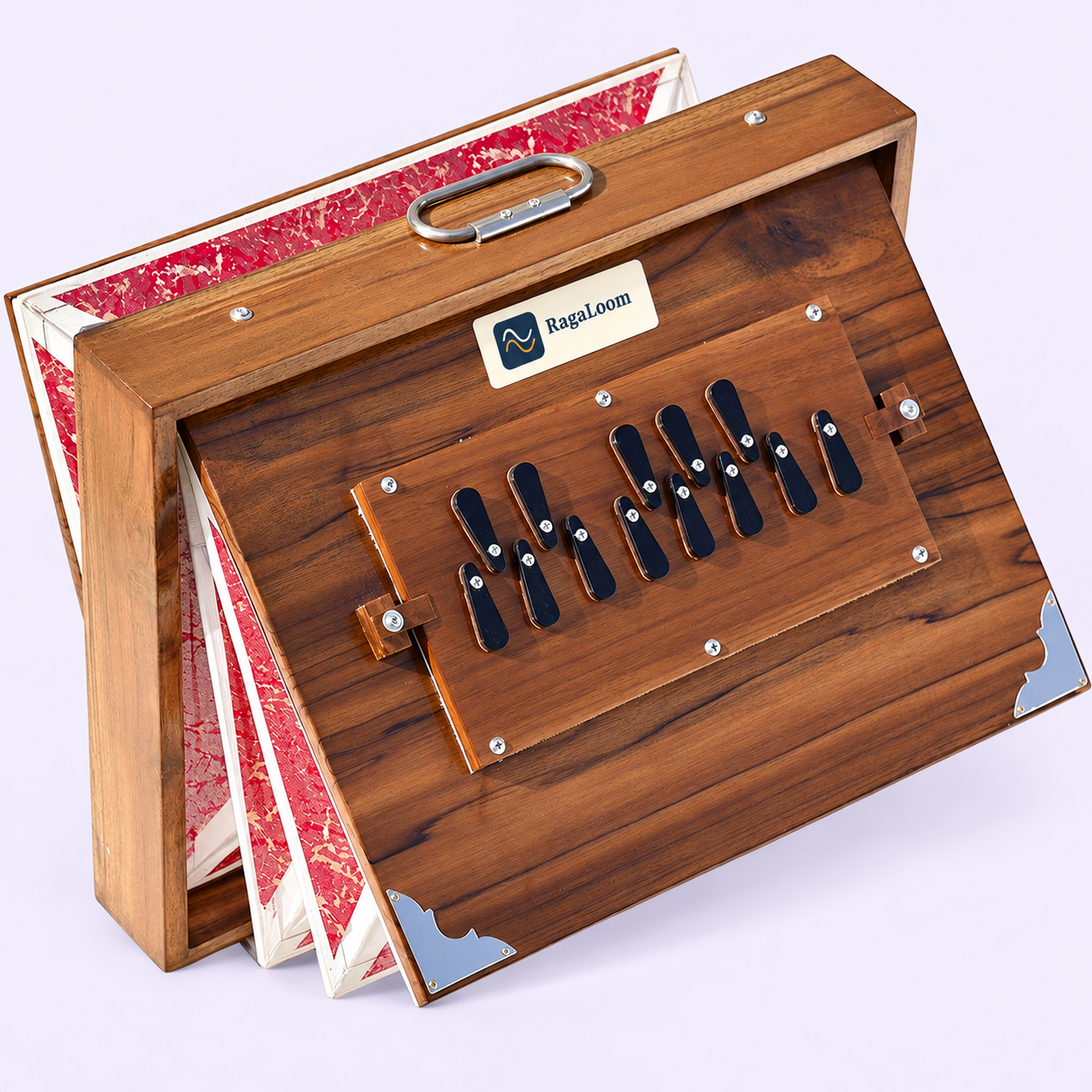
A shruti box is one of the simplest instruments you can own. It has no electronics, no keyboard and very few moving parts, which is exactly why a little regular care keeps it sounding steady for years. People often search for shruti box tuning and “how to tune a shruti box”, so here is the honest answer first: you do not tune a shruti box the way you tune a guitar. This guide explains what tuning means for a shruti box, what you can safely do at home, and how to look after it wherever you live.
What “tuned to 440 Hz” means
Inside every shruti box is a set of small brass reeds, one for each note. Each reed is made to sound one fixed pitch when air flows over it. RagaLoom shruti boxes are handcrafted in India, tuned to A=440 Hz as standard and checked before dispatch. That means the reeds are set so that the note A sounds at 440 Hz, the common concert pitch used by most pianos, keyboards and tuners in the US, UK, Canada, Australia and Europe.
Our 13-note models cover one chromatic octave from C to the next C. The 17-inch professional model has three reed sets and 36 notes across three octaves. If you are curious about the difference between 440 Hz and 432 Hz, read our 440 Hz vs 432 Hz guide.
Tuning your voice or instrument to the box
Because the reeds stay fixed, the shruti box is the reference and you adjust to it. A simple routine:
- Release the control for your tonic note (Sa) and pump the bellows slowly and evenly.
- Sing or hum the note and listen for the two sounds to merge.
- Add the fifth (Pa) or the octave if you like, and move to your practice.
- If you play another instrument, tune that instrument to the drone, not the other way around.
If you play with a keyboard, tuner or app, check that it is set to 440 Hz so everything agrees.
Should you retune the reeds yourself?
We recommend that you do not. Reed tuning is delicate work: a tiny change to a reed changes its pitch, and scraping the wrong spot can leave a note permanently out of tune. If a note sounds wrong, silent or weak, the cause is usually something simple such as dust, an air leak or a control that is not fully open, rather than the tuning itself. Check those first, and if the problem remains, contact us before trying any repair. Our harmonium care guide gives the same advice for harmoniums.
Everyday care that keeps the drone steady
Your shruti box is a wooden cabinet with leather or cloth bellows and brass reeds. Wood and bellows react to the air around them, so most care is about the environment. This is general advice rather than a product specification.
Unpack gently after shipping. Your instrument has travelled from India and may have passed through very different temperatures. Leave the box unopened indoors for several hours, longer if it arrived in freezing or very hot weather, before you open it. This avoids condensation on the reeds.
Keep humidity steady. A stable indoor humidity of roughly 40 to 60 percent suits most wooden instruments. A cheap digital hygrometer tells you where you stand. In dry heated rooms in a northern winter, or in a damp flat, keep the box away from radiators, windows and outside walls.
Avoid heat and sun. Do not leave the box in a parked car, in direct sun or next to a heater. Heat can dry out glue and leather and can make the pitch drift slightly.
Close the controls when you finish. Shut all the note controls so that dust does not settle on the reeds, and close the bellows gently.
Pump with a slow, even motion. Fast or forceful pumping does not make the drone louder, it just stresses the bellows. A steady motion gives the smoothest sound.
Wipe, do not wash. Use a soft dry cloth on the cabinet. Never use water, polish or solvents near the reeds or bellows.
Helping your hands: the foot pedal
If you sing while you play, pumping by hand can be tiring. Our wooden shruti box foot pedal lets you pump the bellows with your foot so your hands stay free. It is made for compatible 16 × 12-inch shruti boxes, so check your model before you order. You can see it with our other shruti box accessories.
Storage and travel
Store the box on a shelf or in a cabinet, flat and away from outside walls. If you travel with it, use a padded case and keep it out of hot cars and cold holds. A shruti box is more compact than a harmonium, which is one reason many people choose it as a first drone instrument. If you are weighing the two, see harmonium vs shruti box.
Choosing a shruti box
If you are shopping rather than maintaining, start with the how a shruti box works explainer, then browse all shruti boxes. The 15-inch teak shruti box is our most compact 13-note model, and the 17-inch professional three-reed shruti box offers a wider range.
For orders from abroad, see our shipping page for rates and countries, and our returns policy. Please keep the original packaging safe in case you want to return the item. Questions? Contact us.
Frequently asked questions
Can I tune a shruti box myself?
We recommend against it. The reeds are tuned to fixed pitches before dispatch, and adjusting them by hand can damage a note. Contact us if a note sounds wrong.
What pitch are RagaLoom shruti boxes tuned to?
Our shruti boxes are tuned to A=440 Hz as standard and checked before dispatch.
Why is one note quieter than the others?
Often a control is not fully open, a little dust has settled on the reed, or the bellows are being pumped unevenly. Check these first.
How should I store my shruti box?
Keep it in a stable, moderate room, away from heat, direct sun and damp, with the controls closed.
Does the foot pedal fit every shruti box?
No. It is designed for compatible 16 × 12-inch models, so check the product page before you order.
Related articles

A Short History of the Harmonium: From Paris to India
Few instruments feel as Indian as the harmonium, yet it did not begin in India. Its story crosses Paris, colonial Calcutta, the radio studios of…
Read article →
Harmonium for Kirtan Singers: Getting Started Abroad
If you have just started to sing kirtan, or you have been asked to lead a circle at your local yoga studio, temple or community…
Read article →
Importing an Indian Instrument: Customs, Duties and Taxes Explained
Importing an Indian instrument is straightforward, but the part that surprises most first-time buyers is what happens at the border. This guide explains customs duties…
Read article →